What are Ordinals, Runes, and other inscriptions on Bitcoin?
Inscriptions on Bitcoin have existed since the beginning, Ordinals changed their use
The idea of storing data on Bitcoin did not begin in 2023. As early as the Genesis block, mined on January 3, 2009, Satoshi Nakamoto embedded a now-famous message taken from The Times newspaper. This first example shows that the blockchain could already serve as an immutable registry for more than just financial transactions.
In the years that followed, this capability remained marginal. The use of fields such as OP_RETURN allowed small amounts of data to be included, typically for cryptographic proofs or short messages.
The situation changed with the launch of the Ordinals protocol in 2023. It introduced a system for numbering satoshis, the smallest unit of Bitcoin, making it possible to identify them individually and attach data to them. This approach relies on two components: the “Ordinal Theory,” which organizes satoshis, and inscriptions, which allow files to be linked to them.
The SegWit (2017) and Taproot (2021) upgrades made this evolution possible by modifying transaction structures and increasing storage capacity in certain parts of blocks.
Following Ordinals, a first standard for fungible tokens emerged: BRC-20. These tokens rely on JSON-based inscriptions to perform simple operations such as deploy, mint, and transfer. However, this technical simplicity significantly limits their use cases, as they do not rely on smart contracts.
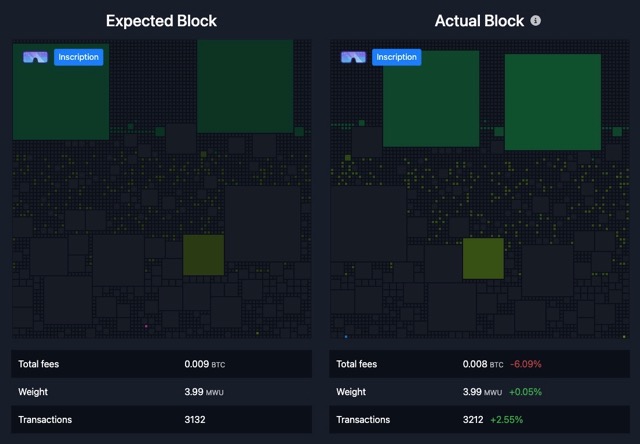
To address these limitations, the Runes protocol was later introduced by the same creator. It aims to provide a model more aligned with Bitcoin’s architecture by relying directly on the UTXO model. Transfers can be batched, costs reduced, and overall efficiency improved compared to BRC-20.
Limited adoption, between technical constraints and a divided community
Despite strong initial visibility, inscriptions on Bitcoin remain a marginal use case today.
The first limitation is technical. Bitcoin was not designed to store large amounts of data or execute complex logic. Its capacity is intentionally limited, which leads to a rapid increase in fees when activity rises. In this context, inscriptions directly compete with monetary transactions for block space.
The second limitation concerns user experience. Interactions with BRC-20 or Runes remain fragmented, not very intuitive, and difficult to standardize. The lack of smart contracts and dedicated infrastructure makes these systems poorly suited for large-scale use.
A more structural reality also emerges: the user base remains limited. A significant portion of activity around inscriptions is driven by speculative dynamics, with many tokens created without clear utility. This dynamic contributed to rapid popularity, but one that has been difficult to sustain over time.
This situation has fueled a persistent divide within the Bitcoin community.
On one side, some argue that these uses divert Bitcoin from its primary purpose as a peer-to-peer monetary system. They highlight concerns about network congestion and rising costs for users.
On the other, a more permissive view emphasizes that Bitcoin is an open protocol. From this perspective, any valid transaction that follows the network’s rules is a legitimate use, regardless of its purpose.
⚡️ What is the Lightning Network? The ultra scalable Bitcoin layer
Between these two views, one conclusion stands: inscriptions are technically possible, but still difficult to use at scale.
It is too early to say whether they will become a lasting use case for Bitcoin. Their future will depend on their ability to overcome current limitations, particularly in terms of scalability and user experience.
Otherwise, they may remain a temporary phenomenon.
However, if a protocol eventually makes these use cases efficient and relevant, a new category of applications could emerge. In any case, it will be the market, rather than ideological debates, that ultimately determines their place within the Bitcoin ecosystem.